

Case Studies
Avista Corp. Electric Vehicle Supply Equipment Pilot
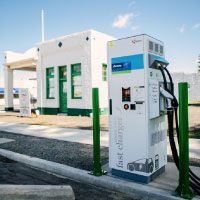
Piloting Electric Vehicle Supply Equipment (EVSE) in Avista Corp's service territory to evaluate regional electrification requirements in eastern Washington, northern Idaho and part of southern and eastern Oregon
- EV adoption increased from 23% in 2016 to 41% in 2019
- Pilot participants were highly satisfied with their experience
- Over 53,000 charging sessions were completed and analyzed
- Networked EVSEs proved more expensive to maintain with higher failure rates
- Light-duty EV loads will be manageable
- Utility programs are effective at catalyzing market adoption
- Workplace charging was proven to spur market adoption
- Activity conducted from 2016 - June 2019
Case Study Information
Overview
Company: Avista Corp Type: Charging infrastructure Location: Eastern Washington, northern Idaho and part of southern and eastern Oregon Case Study Publishing Date: October 18, 2019 Fleet Size: N/A Program Goals: Test infrastructure requirements to further regional EV goals and advancement Fleet Conversion Vehicles: N/A Replacement Vehicle Class: N/A Vehicle Use Case: N/A Replacement Vehicle Fuel Consumption: N/ACase Study
Objective: Avista conducted a three-year Electric Vehicle Supply Equipment (EVSE) pilot in beginning in 2016, with the main objectives of understanding (1) light-duty EV load profiles, grid impacts, costs, and benefits, (2) how the utility may better serve all customers in the electrification of transportation, and (3) begin to support early EV adoption in its service territories. Networked and non-networked charging equipment was procured from six different manufacturers and installed in residential and commercial properties across Avista's service territory. A total of 439 EVSE charging ports were installed in a variety of locations, including 226 residential, 123 workplace, 24 fleet, 20 multiple-unit dwelling, and 7 DC fast charging sites. VEHICLE OVERVIEW Number of Vehicles: N/A Types of EVs: N/A EV Deployment Timeline: N/A Miles Driven: N/A CHARGING OVERVIEW Charging Infrastructure: Networked and non-networked Level 2 chargers, Level 3 direct-current fast charger (DCFC) A total of 439 EVSE charging ports, including 226 residential, 123 workplace, 24 fleet, 20 multiple-unit dwelling, and 7 DC fast charging sites. Charging equipment included:- Residential AC Level 2 - networked
- Commercial AC Level 2 - networked
- DC fast charging site
- Residential AC Level 2 – non-networked
- Commercial AC Level 2 – non-networked Charging Infrastructure Cost:
- Residential AC Level 2 - networked; $2,445
- Commercial AC Level 2 - networked; $6,035
- DC fast charging site; $128,084
- Residential AC Level 2 – non-networked; $1,766
- Commercial AC Level 2 – non-networked; $4,472
- Residential AC Level 2 - networked; $370/yr O&M, 98% uptime, 66% online
- Commercial AC Level 2 - networked; $600/yr O&M, 86-93% uptime, 76-86% online
- DC fast charging site; $1,550/yr O&M, 87% uptime, 87% online
- Residential AC Level 2 – non-networked; $5/yr O&M, 100% uptime, NA online
- Commercial AC Level 2 – non-networked; $185/yr O&M, 99% uptime, NA online
Summary
Program Results:- EV adoption increased from 23% in 2016 to 41% in 2019
- Over 53,000 charging sessions were completed and analyzed
- Average charging utilizing was 17 sessions per month, consuming 7kWh per session in 1.6 hours, charging at 3.3 or 6.6. kW
- Customer feedback surveys reported 98% customer satisfaction with EVs and EVSE performance, 85% satisfaction for non-networked EVSE
- Networked EVSEs proved to be significantly more expensive to maintain with higher failure rates and repairs
- DCFC installations were capital intensive and require alternative rate designs for effectiveness
- EVs removed 4 tons of CO2 emissions annually; an 80% reduction from gasoline vehicles
- EV market introduction and advancement tactics included education and outreach efforts, low income programs, dealer engagement including a referral program, residential EVSE offerings, and installation of chargers at workplace, fleet, multiple-unit dwelling and public sites
- Pilot participants were highly satisfied with their experience
- Non-networked EVSE are preferred from a customer experience and cost perspective
- Networked EVSEs are significantly more expensive to install and maintain, and resulted in higher failure rates
- EVSE-to-network interoperability and standards are critical to market advancement
- The majority of charging was from residential applications with peak energy consumption occurring between 5-7pm
- Energy load was similar across EV and driver types, with higher consumption from commuters on weekdays
- Residential and workplace customers accepted 75% peak load reductions by remote utility controls without negative effects on driving habits or overall satisfaction
- Grid impacts and peak load costs may become significant over longer-term timeline
- Light-duty EV loads will be manageable; analysis includes they will have little effect on grid distribution over the next ten years
- Utility programs are effective at catalyzing market adoption
- Workplace charging was proven to spur market adoption
- Low dealer engagement, a lack of EV inventories, and EV perception issues continue to be a major barrier to mainstream EV adoption
References
Case Study & Image Source Czerniak, Jon, Farley, Rendell, Vervair, Mike. Avista Corp. Electric Vehicle Supply Equipment Pilot Final Report October 2019. https://www.myavista.com/-/media/myavista/content-documents/energy-savings/electricvehiclesupplyequipmentpilotfinalreport.pdf?la=en About Avista Avista Corporation is an energy company involved in the production, transmission and distribution of energy as well as other energy-related businesses. Its largest subsidiary, Avista Utilities, serves more than 600,000 electric and natural gas customers across 30,000 square miles in eastern Washington, northern Idaho and parts of southern and eastern Oregon.Chula Vista, California Municipal Fleet Electrification
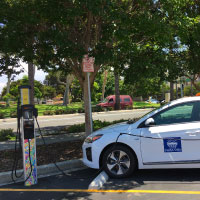
Achieving plans to transition 40% of the City's fleet to alternative fuel vehicles (AFV) by 2020
- The City has transitioned 36% of its fleet to AFVs
- EVs saved 75% on fuel costs and were in operation 84% more of the time
- EVs were 80% more cost effective in comparison to maintenance and repairs
- Fuels costs are 61% lower than internal combustion replacement vehicles
- Replacing older models in the City's fleet allowed for immediate cost savings to be realized
- Utility incentives reduced charging infrastructure costs
- The City's mantra “Fleet follows facilities” prioritizes charging infrastructure first to align procurement and account for longer installation lead times
- Activity conducted since 2012
Case Study Information
Overview
Company: City of Chula Vista Type: Municipal fleet, charging infrastructure Location: Chula Vista, California Case Study Publishing Date: June 2019 Fleet Size: N/A Program Goals: Municipal fleet electrification aligned with the City's sustainability goals Replacement Vehicle Class: Light-duty vehicles Vehicle Use Case: Short-distance travel by the City employees in the Senior Vehicle Patrol (SVP), building code enforcement, and city pool Replacement Vehicle Fuel Consumption: N/ACase Study
Objective: In 2000 the City of Chula Vista became the first city in San Diego County to adopt a Climate Action Plan (CAP); updates were made to the CAP in 2017 to replace all new vehicles with AFVs wherever possible and in 2018 the City Council voted to acquire 34 new fleet vehicles, including 14 battery-electric vehicles and 28 plug-in hybrid models. The City transitioned vehicles based on age, mileage and expense to maintain. VEHICLE OVERVIEW Number of Vehicles: 41 Types of EVs: Various; procurement via the Climate Mayors Electric Vehicle Purchasing Collaborative EV Deployment Timeline: Beginning in 2018 CHARGING OVERVIEW Charging Infrastructure: 123 Level 2 charging stations Charging Infrastructure Costs: $456 was the average cost for L2 installation and equipment; 30-35 stations were installed free of charge due to utility incentives in disadvantaged communities through a pilot project OPERATIONS & MAINTENANCE Capital Costs: $28,000 per vehicles procured through a municipal lease program Operations & Maintenance: EV maintenance & repair costs of $.03, compared to $.15 with older vehicles TRAINING & CHANGE MANAGEMENT Training: Individual trainings are conducted as departments are assigned EVs; larger fleet pools would require more broad-based training and outreach Change Management: N/ASummary
Program Results:- EVs saved 75% on fuel costs, were in operation 84% more time, and were 80% more cost effective in comparison to maintenance and repairs
- In addition to lower operating costs and reduced GHGs, the City forecasts additional savings from staff time dedicated to maintenance, resources, and hazardous waste
- The City was able to realize operational cost savings immediately by prioritizing replacements of older models first
- Municipal leasing allowed for Federal Tax Credits to be realized, offsetting total capital costs
- The City is working to increase fleet utilization including fleet reviews to identify vehicles that travel <4,000/year that are designated for elimination without replacement
- Electric fleet vehicles allow the City to take a leading role in environmental stewardship and advance EV adoption locally
- The City has established an EV-first policy for all eligible vehicle replacements
- The City plans to purchase an additional 34 EVs including 13 Ford Fusion PHEVs for the Investigation Unit of the Chula Vista Police Department, 9 Chevy Bolt BEVs and 4 Chevy Bolt Cargo vehicles
- The City also plans for five electric transit buses by end of 2020
References
Case Study Source The Climate Mayors Electric Vehicle Purchasing Collaborative (the Collaborative). Municipal Fleet Electrification: A case Study of Chula Vista, CA June 2019. https://driveevfleets.org/wp-content/uploads/2019/06/Chula-Vista-Case-Study.pdf About the Climate Mayors Electric Vehicle Purchasing Collaborative The Climate Mayors Electric Vehicle Purchasing Collaborative (the Collaborative) is a joint effort by Climate Mayors, the Electrification Coalition, and Sourcewell working toward accelerating the transition of city fleets to electric vehicles (EVs). By creating a new and innovative cooperative purchasing mechanism, the Collaborative is reducing major barriers to fleet electrification for cities and other public agencies. In addition to an innovative cooperative purchasing option, the Collaborative offers a host of technical resources, analyses, and staff support, which reduces major obstacles to fleet electrification. About Climate Mayors Representing over 74 million Americans from 48 states, Climate Mayors is a diverse network of 466 U.S. city mayors who have committed to fighting climate change. Originally founded in 2014, the network’s ranks swelled to almost 400 mayors in response to the Trump administration’s withdrawal from the Paris Agreement. Climate Mayors commit to taking ambitious action to meet each of their cities’ current climate goals, while working together towards achieving our national Paris targets. Climate Mayors is founded and Chaired by Los Angeles Mayor Eric Garcetti, and Co-Chaired by Mayors Sylvester Turner (Houston) and Martin J. Walsh (Boston). About the Electrification Coalition The Electrification Coalition (EC) is a non-partisan, not-for-profit group committed to promoting policies and actions that facilitate the deployment of plug-in electric vehicles on a mass scale in order to combat the economic, public health, and national security dangers caused by America’s dependence on oil. The EC works with a variety of stakeholders that represent the entire electrified transportation value chain, positioning the organization as a dedicated rallying point for an array of electrification allies. Image Source San Diego Gas & Electric. http://www.sdgenews.com/article/transitioning-electric-vehicles-helps-city-chula-vista-save-moneyWinter Park, Florida Municipal Fleet Electrification
The City of Winter Park, Florida discovers cost-effective procurement strategy to begin transitioning EVs into their municipal fleet
- EVs provide more cost savings with increased usage and mileage
- By evolving procurement to include municipal leasing options, EV business cases can become more cost justified, reducing initial upfront capital costs and realizing operational savings immediately
- Speculation existed for EV performance, but exposure to vehicles proved effective at changing initial perceptions
- Activity conducted since 2017
Case Study Information
Overview
Company: City of Winter Park, Florida Type: Municipal fleet Location: Winter Park, Florida Case Study Publishing Date: 2020 Program Goals: Begin integrating EVs into the City’s fleet as part of the Winter Park’s first sustainability action plan Replacement Vehicle Class: Class 1 passenger vehicle; Toyota Highlander Hybrids at the end of their service life Vehicle Use Case: Short-distance travel by city employees Replacement Vehicle Fuel Consumption: N/ACase Study
Objective:In 2017, the City of Winter Park purchased its first EV, a 2017 Ford Focus with a 115 mile range. Within the first year, employees from permitting department and traffic enforcement department began expressing interest in procuring additional EVs based on their positive experience with the City’s first EV. VEHICLE OVERVIEW Number of Vehicles: 5 Types of EVs: 2017 Ford Focus EV Deployment Timeline: In 2017 the City purchases its first EV CHARGING OVERVIEW Charging Infrastructure: The City relies on public charging within Winter Park Charging Infrastructure Costs: N/A OPERATIONS & MAINTENANCE Capital Costs: $23,682.88 per vehicle, less federal incentives and credits- Vehicles were purchased through the Climate Mayors Electric Vehicle Purchasing Collaborative resulting in a savings of $1,200 per vehicle
- The City evolved traditional procurement from a competitive bid process to a lease agreement, allowing vehicles to be paid through a one-time, initial payment and ownership option after 24 months
Summary
Lessons Learned:- Employee Ride & Drive events helped familiarize employees with EVs and build confidence in fleet use cases; within the first year of use, initial skepticism dissipated
- By evolving procurement to including leasing options that reduce upfront capital, EV business cases can become more cost justified by reducing initial upfront costs
- Internal champions were critical to the project success; agility and adaptability is critical to building momentum and adoption
- The City learned that EVs provide more cost savings with increased usage and mileage
- The City will be using telematics to inform future EVs to transition based on real-world usage
- Using a data-driven approach, along with innovative procurement, the City will maximize ROI to speed fleet electrification
References
Case Study Source The Climate Mayors Electric Vehicle Purchasing Collaborative (the Collaborative). Municipal Fleet Electrification: A Case Study of Winter Park, FL. https://driveevfleets.org/wp-content/uploads/2018/08/Winter-Park-Case-Study_FINAL.pdf About the Climate Mayors Electric Vehicle Purchasing Collaborative The Climate Mayors Electric Vehicle Purchasing Collaborative (the Collaborative) is a joint effort by Climate Mayors, the Electrification Coalition, and Sourcewell working toward accelerating the transition of city fleets to electric vehicles (EVs). By creating a new and innovative cooperative purchasing mechanism, the Collaborative is reducing major barriers to fleet electrification for cities and other public agencies. In addition to an innovative cooperative purchasing option, the Collaborative offers a host of technical resources, analyses, and staff support, which reduces major obstacles to fleet electrification. About Climate Mayors Representing over 74 million Americans from 48 states, Climate Mayors is a diverse network of 466 U.S. city mayors who have committed to fighting climate change. Originally founded in 2014, the network’s ranks swelled to almost 400 mayors in response to the Trump administration’s withdrawal from the Paris Agreement. Climate Mayors commit to taking ambitious action to meet each of their cities’ current climate goals, while working together towards achieving our national Paris targets. Climate Mayors is founded and Chaired by Los Angeles Mayor Eric Garcetti, and Co-Chaired by Mayors Sylvester Turner (Houston) and Martin J. Walsh (Boston). About the Electrification Coalition The Electrification Coalition (EC) is a non-partisan, not-for-profit group committed to promoting policies and actions that facilitate the deployment of plug-in electric vehicles on a mass scale in order to combat the economic, public health, and national security dangers caused by America’s dependence on oil. The EC works with a variety of stakeholders that represent the entire electrified transportation value chain, positioning the organization as a dedicated rallying point for an array of electrification allies. About Sourcewell Sourcewell is a self-supporting government organization, partnering with education and government agencies throughout North America. They offer a cooperative purchasing program with over 300 awarded vendors on contract. On behalf of their 50,000 members, Sourcewell conducts competitive solicitations, awarding to the most responsive and responsible vendors. The result of this cooperative effort is a high-quality selection of nationally leveraged, competitively solicited contract solutions to help create efficiencies and meet the ever-challenging needs of current and future member agencies. Image source: Isaac Babcock. Winter Park / Maitland Observer. Electric cars charge for free in Winter Park. https://www.orangeobserver.com/article/electric-cars-charge-free-winter-parkCity of Loveland, Colorado Municipal Fleet Electrification
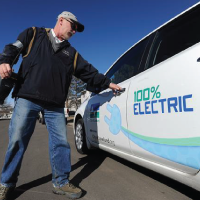
Innovative procurement strategies and public/private partnerships prove positive business case for passenger class EV municipal fleets
- The City has found Battery Electric Vehicles cost 41% less to own and operate than gas-powered vehicles
- EVs have proven to be a cost-effective addition to the municipal fleet for local service needs
- Municipal leasing program was utilized to reduce capital costs
- Vehicle reliability, performance, and range all exceeded initial expectations
- EV cost of driving was $.024 per mile versus $.146 per mile for a gas-powered vehicle
- EV total cost of ownership was $.17 per mile versus $.29 per mile for a gas-powered vehicle
- Activity conducted from September 2012
Case Study Information
Overview
Company: City of Loveland Type: Municipal fleet electrification Location: Loveland, Colorado. A community of 70,000 residents in Northern Colorado Case Study Publishing Date: September 2013 Fleet Size: 600 vehicles, various classes Program Goals: Convert 100% of municipal fleet to EVs for vehicles where no heavy use is required and within a 35 mile radius of the city Fleet Conversion Vehicles: Passenger-class vehicles (~100 vehicles in fleet) Replacement Vehicle Class: Class 1 passenger vehicle Vehicle Use Case: Short-distance travel, <20 miles per day, annual mileage 6,000/year Replacement Vehicle Fuel Consumption: 12 MPG, 500 gallons/yearCase Study
Objective: To combat escalating fuel costs and work to achieve city-wide sustainability goals, the City of Loveland began implementing EVs into their municipal fleet to evaluate cost effectiveness and overall benefits from alternative-fuel vehicle procurement. VEHICLE OVERVIEW Number of Vehicles: 5 Types of EVs: Nissan LEAF EV Deployment Timeline: The City unveils its first EV fleet additions in September 2012 Miles Driven: 4,000 and 2,000 miles for each vehicle within the first seven months of operation CHARGING OVERVIEW Charging Infrastructure: Three Level 2 chargers; 5:3 vehicle-to-charger ratio Charging Infrastructure Cost: N/A OPERATIONS & MAINTENANCE Capital Costs: The City leveraged Nissan’s municipal lease program over a three year term; the program allowed the federal EV tax credit ($7,5000 per vehicle) to be incorporated into the lease directly. Operations & Maintenance Costs:- EV cost of driving was $.024 per mile versus $.146 per mile for a gas-powered vehicle
- EV total cost of ownership was $.17 per mile versus $.29 per mile for a gas-powered vehicle
Summary
Lessons Learned:- Municipal leasing programs reduce initial capital requirements allowing EVs to realize immediate savings
- Public/private partnership with auto OEM, Nissan, and local dealers proved to be a key ingredient in market adoption
- The City was the first public agency to use Nissan’s municipal lease purchasing plan; four months was added to the program schedule for legal diligence; however the process now takes <30 minutes
- The municipal lease program has since been modified to pass federal tax credits through the dealer to the municipal purchaser
- Initial concerns existed from employee perceptions about vehicle reliability, performance, and range; vehicle use quickly removed all concerns
- The Nissan LEAF BEVs are used daily by city employees with high satisfaction
- The City continues to play a central role in EV community advancement, collaborating with neighboring City of Fort Collins, Colorado State University, and the Electrification Coalition, to make the region a leader in EV deployments
References
Case Study Source Electrification Coalition Case Study. The City of Loveland: Marrying Functionality and Economics. https://driveevfleets.org/wp-content/uploads/2018/08/Loveland_Case_Study_092613.pdf The City of Loveland https://www.cityofloveland.org/ Drive Electric Northern Colorado http://driveelectricnoco.org/ Image source: Jenny Sparks / Loveland Reporter-Herald, https://www.reporterherald.com/2014/02/28/electric-car-push-continues-in-loveland/Foothill Transit Battery Electric Bus Demonstration Results
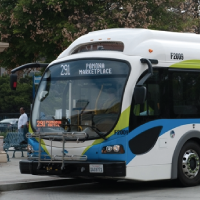
Taking the first step toward transitioning Foothill Transit’s fleet to 100% electric by 2030
- Foothill Transit's first deployment of Battery electric buses (BEB)
- BEBs can achieve 8 times higher fuel economy in comparison to CNG buses
- Total maintenance costs were $0.14/mi for BEBs and $0.20/mi for CNG buses
- Fleet management software mitigated demand charges to effectively manage energy costs
- Foothill Transit earned approximately $126,000 of Low Carbon Fuel Standard (LCFS) credits
- On-route fast chargers operated reliably with minimal issues and vehicle downtime
- Foothill Transit reports there’s still a lot of learning as the agency ramps up to a larger BEB fleet
- Activity conducted from March 2014 through December 2016
Case Study Information
Overview
Company: Foothill Transit Type: Public Transit Location: San Gabriel and Pomona Valley region of Los Angeles County, California Case Study Publishing Date: June 2017 Fleet Size: 376 buses Program Goals: Test performance and viability of battery electric buses (BEBs) on a dedicated route Fleet Conversion Vehicles: CNG buses Replacement Vehicle Class: Public transit bus Vehicle Use Case: The BEB fleet operates on Line 291, a 16.1-mile route that travels between La Verne and Pomona; the line serves a transit dependent community and has high ridership Replacement Vehicle Fuel Consumption: 2.1 miles per diesel gallon equivalentCase Study
Objective: After an initial demonstration in 2014, Foothill Transit purchased twelve next-generation BEBs from Proterra through a $10.2 million grant under the Federal Transit Administration’s (FTA’s) Transit Investments for Greenhouse Gas and Energy Reduction (TIGGER) Program. Foothill Transit began operating the fleet of 12 battery electric buses (BEBs) on its Line 291, a 16.1-mile route that travels between La Verne and Pomona and routes through Pomona Transit Center where one fast charger is located for on route charging. VEHICLE OVERVIEW Number of Vehicles: 12 Types of EVs: Proterra 35’ composite body buses with on-route charging capabilities EV Deployment Timeline:- March 2014: Foothill Transit began operating the new fleet of electric buses on line 291
- April 2014 through July 2015: initial testing period
- August 2015 through December 2016: second testing period
- 2009 - 35-ft BE35 fast charge buses - $1,200,000
- 2013 - 35-ft BE35 fast charge buses - $904,490
- 2014 - 40-ft Catalyst fast charge buses - $825,000
- 2015 - 40-ft Catalyst extended range buses - $789,000 Operations & Maintenance Costs:
- BEB availability was slightly lower at 90% compared to 93% for the CNG baseline buses
- During the data period, Foothill Transit paid an average of $0.17/kWh for electricity for the BEBs and $0.96/gge for CNG
- Energy cost for the BEB fleet equates to $0.37 per mile in comparison to CNG buses on the same route at $.50 per mile
- To avoid demand chargers, Foothill Transit worked with Proterra to provide fleet management software that manages rate schedules and charge management resulting in a lower electricity cost over time
- Average per-mile maintenance costs were $0.21/mi for BEBs and $0.22/mi for CNG buses
- The total maintenance cost is $0.14/mi for BEBs and $0.20/mi for CNG buses
Summary
Lessons Learned:- The current fleet of twelve 35-ft BEBs continues to operate well, accumulating more than 902,000 miles (as of December 2016)
- Route reviews are essential to right-fit BEBs based on driving range, duty cycle, and charging opportunities
- Agencies could benefit from conducting route analysis and simulations to meet the range requirements
- Short-range, on-route-charged buses are inflexible and cannot be deployed at other service routes that do not connect to an on-route charging location
- Route schedules need to be adjusted to accommodate BEB charging time
- Higher use of air conditioning lowers the effective range in hotter months; summer schedules are adjusted to account for more charging time
- On-route fast chargers operated reliably with minimal issues, none of which resulted in downtime for the buses
- Foothill Transit’s combined BEB fleet (17 buses) has been charged more than 119,000 times since the fast chargers were installed.
- Availability of the two charging heads was 98% and 99%.
- Proterra reports that the high voltage batteries are showing little to no signs of capacity degradation to date, and current estimates show they may last for up to 12 years
- Foothill Transit earned approximately $126,000 of Low Carbon Fuel Standard (LCFS) credits
- Foothill Transit reports that there is still a lot of learning as the agency ramps up to a larger BEB fleet Next Steps:
- Foothill Transit’s combined fleet includes 17 Proterra BEBs including three first-generation BEBs and two new 40-ft BEBs
- The BEB fleet has driven more than 1,134,000 miles
References
Case Study Source Leslie Eudy, L., and & Jeffers, M (2017). National Renewable Energy Laboratory. Foothill Transit Battery Electric Bus Demonstration Results: Second Report. https://www.nrel.gov/docs/fy17osti/67698.pdf About NREL NREL is a national laboratory of the U.S. Department of Energy Office of Energy Efficiency & Renewable Energy. Operated by the Alliance for Sustainable Energy, LLC. The full case study is available at no cost from the National Renewable Energy Laboratory (NREL) at www.nrel.gov/publications. Image source: CalTransit. https://caltransit.org/about/50-years/member-profiles/foothill-transit/Massachusetts Pilot for Electric School Bus Deployments
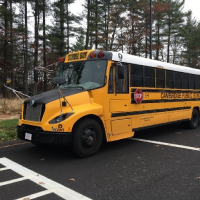
Massachusetts Department of Energy Resources partners with three school districts to test battery electric buses in cold weather environments
- Electric school buses present a viable vehicle technology for school bus operations
- Electric school buses produce fewer greenhouse gases versus diesel school buses
- Key learning for importance of facilitating vehicle and charging infrastructure procurement in tandem
- Fueling costs were not lower for the electric school buses than traditional diesel buses
- Bus efficiency ranged from 1.3-1.4 kWh per mile with a 70-80 mile range
- Unmanaged charging and high vampire loads resulted in excess demand
- Managed charging identified as critical to total cost of ownership
- Bus operating efficiency tended to be lower in lower temperatures
- Electric buses encountered a number of mechanical and logistical challenges
- OEM engagement was critical for pilot success and future product development
- Level 2 charging was deemed cost effective charging for the pilot
- V2G or V2B (Vehicle to Grid/Building) electric school bus systems determined not yet cost-effective
- Pilot underscores value of training and change management planning for EV deployments
- Activity conducted from Fall 2015 through February 2018
Case Study Information
Overview
Company: Massachusetts Department of Energy Resources (DOER) with funding from the Regional Greenhouse Gas Initiative and support from Vermont Energy Investment Corporation. Participating School Districts include Amherst Regional Public School District (Amherst), Cambridge Public School District (Cambridge), and Concord Public School District (Concord) Type: School Buses Location: Massachusetts Case Study Publishing Date: April 20, 2018 Fleet Size: Various- Amherst Regional Public School: privately operated 10-vehicle fleet supported one single technician
- Cambridge Public School District: privately operated transporting 2,500 students
- Concord Public School District: transporting over 3,400 students from Concord, Carlisle, and two local private schools
Case Study
Objective: Amherst Regional Public School District (Amherst), Cambridge Public School District (Cambridge), and Concord Public School District (Concord) deployed one electric school within their school district as a first-of-its-kind cold weather pilot for 279 days. VEHICLE OVERVIEW Number of Vehicles: 3; 1 per participating school district Types of EVs: Lion eLion Class C battery electric school bus with 104 kWh battery and 75 mile range EV Deployment Timeline:- Fall of 2015: project was initiated in the
- June 2016-January 2017: procurement, site preparations and vehicle readiness
- February 2017-February 2018: vehicle deployment, training, and ongoing evaluation
- Fuel economy was 2.38 average kWh/m
- Electric vehicle energy costs were $7,240 over the course of the pilot
- Estimated diesel equivalent buses would have cost $4,413
- Demand charges made up a significant portion of total costs: $2,608 and can be reduced with managed charging.
- Maintenance costs were not collected for the three electric school buses nor comparable diesel buses from the participating school districts.
- All electric buses had reliability or mechanical issues, ranging from noisy cooling fans, to charger failures, to bus breakdowns while in service
Summary
Program Results:- Electric buses emitted 10.2 tons GHG in the pilot vs. 23.7 tons GHG that would have been emitted by a diesel
- Bus efficiency ranged from 1.3 to 1.4 kilowatt-hours (kWh) per mile, providing a range of 70 to 80 miles.
- Total average consumption is 2.38 average efficiency (kWh/m)
- Participating school districts encountered a number of mechanical and logistical challenges
- OEM addressed issues during and after pilot and re-deployed vehicles with zero reported operational issues
- All three of the deployed buses were out of service for a relatively high number of days and logged fewer than half as many miles than the average diesel bus
- Unmanaged charging and high vampire loads contributed to electric bus energy costs being 63% higher than necessary
- Energy savings from electric school buses were much smaller than anticipated, due primarily to uncontrolled charging
- High vampire loads were associated with auxiliary fans and heaters used to heat or cool batteries during charging
- Fueling costs were not lower for the electric school buses versus traditional diesel buses
- Electric school buses present a viable vehicle technology that can reliably be deployed in school bus operations
- Electric school buses are energy efficient and produce fewer greenhouse gases as compared with diesel school buses
- Procurement processes should be run in tandem for vehicle acquisition and charging infrastructure
- Bus operating efficiency decreased in lower temperatures
- Electric school bus range increased with temperature
- Managed charging of buses will dramatically affect energy savings and total cost of ownership
- Charging should occur at off peak times e.g. charged at night, rather than during the day when electricity use is already high
- Coordination with local utility's early-on is critical to understanding rate structures and demand charges
- V2G or V2B electric school bus systems are not cost-effective at present. Any V2X system would present relatively high risk to participating school districts and require close management by school or district staff to realize financial savings.
- Developing a proactive charging plan is critical to managing cost-effective operations
- The buses were early models and different from the Lion buses in production at the pilot’s conclusion.
- Lion learned from the issues the school districts experienced and worked to improve their technology
- Though the pilot has ended, the school districts still operate the electric buses and DOER continues to evaluate their impact. Amherst, Cambridge, and Concord report data weekly to the Department of Energy Resources
- Through a vehicle lifecycle cost comparison, Concord is developing a plan to transition 80% of its bus fleet to electric.
References
Case Study Source Vermont Energy Investment Corporation. Electric School Bus Pilot Project Evaluation. https://www.mass.gov/files/documents/2018/04/30/Mass%20DOER%20EV%20school%20bus%20pilot%20final%20report_.pdf Alternative Fuels Data Center. Case Study: Massachusetts School Fleets Get Answers through Electric Bus Testing. https://afdc.energy.gov/case/3092 About Massachusetts Clean Cities The Massachusetts Clean Cities works with vehicle fleets, fuel providers, community leaders, and other stakeholders to save energy and promote the use of domestic fuels and advanced vehicle technologies in transportation. Image source: Alternative Fuels Data Center. https://afdc.energy.gov/case/3092FedEx Express Global Lessons Learned

FedEx Express shares lessons learned from global fleet electrification
- EVs are deployed in urban areas with low variability and maximum daily distance
- Two major barriers to fleet adoption are battery right sizing and vehicle life optimization
- EVs require a managed transition for maintenance staff
- Charging infrastructure and maintenance has presented a variety of challenges
- OEM engagement is necessary to diversify range and right-size battery capacity
- Activity conducted since 2005
Case Study Information
Overview
Company: FedEx Express Type: Light- and Medium-Duty Trucks Location: London, Los Angeles, San Francisco, Chicago, Memphis, New York, Paris Case Study Publishing Date: 2012 Fleet Size: 45,000 vehicles Program Goals: Target 20% improvement in on-road fuel economy by 2020; reduce operational costs in low-emission zones (LEZs) and Congestion Charge Zones (CCZ) globally Replacement Vehicle Class: Class 1-2, Class 3, Class 4-6 Trucks Vehicle Use Case: Urban delivery service Replacement Vehicle Fuel Consumption: N/ACase Study
Objective: Target 20% improvement in on-road fuel economy by 2020; reduce operational costs in low-emission zones (LEZs) and Congestion Charge Zones (CCZ) globally VEHICLE OVERVIEW Number of Vehicles: 97 EVs in 2012 Types of EVs: Smith Electric Vehicles, Navistar, Freightliner, and Ford EV Deployment Timeline:- June 2005: FedEx Express deploys its first hybrid fleet
- 2008: FedEx Express was among the first companies working to deploy battery electric vehicles in its global fleet
- June 2012: More than 130 PEVs are deployed globally, including 58 battery electric (EVs) in the United States
Summary
Lessons Learned:- EVs are deployed in urban areas with low variability and maximum daily distance to maximize operational savings potential
- Maintenance and vehicle reliability for EVs performed worse than forecasted; fuel savings, vehicle performance, and range performed as expected, and driver satisfaction, impact on corporate image, and on-site charging infrastructure exceeded expectations
- The total cost of ownership remains high with EVs due to initial purchase price
- Two major barriers to fleet adoption are battery right sizing and vehicle life optimization
- FedEx is working directly with OEMs to diversify range and right-size battery capacity
- EVs require a managed transition for maintenance staff; FedEx Express is investing in OEM-level training and joint IP development
- Charging infrastructure and maintenance has presented a variety challenges; EVs deployments are evaluated based on location-specific charging capacity and requirements to manage demand costs
- Public charging infrastructure presents an opportunity for on-route charging, augmenting the business case for EVs vs ICEs as fuel stations in inner cities are becoming scarce.
- FedEx Express continues to work directly with OEMs and other industry stakeholders to advance vehicle requirements and charging infrastructure needs based on real-world use cases
References
Case Study Source Nigro, Nick, Seki, Stephanie. Atlas Public Policy. Electrifying Ride-Hail Services September 2018. http://evsharedmobility.org/wp-content/uploads/2018/09/Electrifying_Ride-Hail_Services.pdf About Atlas Public Policy Atlas Public Policy’s mission is to equip businesses and policymakers to make strategic, informed decisions through the greater use of technology that aggregates publicly available information. Atlas arms our audience with the information necessary to encourage the use of new technologies and products along with changes in consumer behavior. Image source: GM. https://media.gm.com/media/us/en/gm/home.detail.html/content/Pages/news/us/en/2018/mar/0302-maven-austin.htmlPublic Transit Trolley Pilot in San Francisco Bay Area
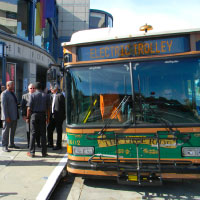
Evaluating cost effectiveness and fleet electrification viability for battery electric vehicles within the San Francisco Bay Area
- Electric buses present a viable vehicle technology for public transit operations
- Electric buses produce fewer greenhouse gases versus diesel buses
- County Connection will reduce its emissions by over 154 tons of CO2 per year
- Maintenance costs for Battery Electric Busses (BEBs) were 13% less than that of diesel equivalent buses
- The battery fleet’s fuel economy was 3.8 times higher than diesel equivalent buses
- The agency plans to save nearly $50,000 per year in fuel savings
- BEBs fuel economy was 2.84 kWh/mile or 13.3 miles per diesel gallon equivalent
- Comparable diesel buses realized 5.1 miles per diesel gallon
- Maintenance costs were $.39 per mile total for battery electric buses with a 76.9% average availability
- Diesel equivalent buses realized $.44 per mile with a 85.5% average availability
- On-route charging is critical to effective operations
- Maintenance teams were unable to take-on end-to-end responsibilities to fully maintain BEBs
- OEM engagement is critical to advancing vehicle and charging requirements based on real-world driving conditions
- Activity conducted from June 2017 - May 2018
Case Study Information
Overview
Company: Central Contra Costa Transit Authority (County Connection) Location: San Francisco Bay Area, California Case Study Publishing Date: December 2018 Fleet Size: 121 fully accessible transit buses and 63 paratransit vehicles Program Goals: Evaluate cost effectiveness and fleet electrification viability for battery electric vehicles within public transit Fleet Conversion Vehicles: Diesel trolley replicas at the end of their expected service life Replacement Vehicle Class Public transit trolley bus Vehicle Use Case: Public transportation on a free circulator route through San Francisco Replacement Vehicle Fuel Consumption: 3.1 miles per gallonCase Study
Objective: In January 2017 County Connection began operating a fleet of four battery electric buses (BEBs) in its service area. Performance was tracked and analyzed from June 2017 through May 2018. VEHICLE OVERVIEW Number of Vehicles: 4 Types of EVs: Gillig/BAE Systems 29-ft Trolley-replica buses built by Gillig with BAE electric propulsion system EV Deployment Timeline:- January 2017: electric bus fleet operations begins
- June 2017 - May 2018: timeframe of fleet performance and analysis
-
Two plug-in chargers at the facility for overnight charging averaging 126 minutes for total charge time per vehicle
One 50-kW WAVE inductive charging pad for wireless charging during scheduled layovers; average charge time of 6.9 minutes
-
The project was funded from a $4.32million FTA Clean Fuels grants
- Fuel economy was 13.3 mpdge
- Electric vehicle energy costs were $.73/mile over the course of the pilot
- Total operating cost per mile ($/mi) for electric buses were $1.11 per mile compared to $.84 from diesel comparable vehicles
Summary
Program Results:- The battery buses averaged between 950 and 1,300 miles per month, with an overall fleet average of 1,074 monthly miles per bus
- The battery fleet’s fuel economy was 3.8 times higher than that of the diesel trolley buses operated on the same service route and 2.6 times higher than that of the diesel buses operated on all the County Connection routes
- Maintenance costs for the battery buses were 13% less than that of the diesel buses
- The monthly energy consumption for inductive charging averaged 8,725 kWh
- Plug-in charging averaged 105 charges per month and 2,658 kWh energy consumption per month
- Fuel economy fluctuated with temperature, decreasing during months over 80°F, averaging 13.3 mpdge
- The average fuel cost per mile for the battery fleet during the evaluation period was $0.73/mi
- Diesel buses were less sensitive to seasonal variations
- The charging efficiency for depot charging was 92.8% and the efficiency of the inductive charging was 85.2%
- The battery fleet’s total propulsion-related maintenance cost were 28% lower than that of the diesel buses.
- Total operating cost per mile for electric buses was $1.11 per mile, compared to $.84 from diesel comparable vehicles
- On-route charging is critical to effective operations
- Induction charging was not as effective as possible due to prioritization of requirements for reliability and system uptime
- Change management plans are critical to cost-effective operations; ensuring proactive charging and reduced demand charges
- Maintenance teams were unable to take-on end-to-end responsibilities to fully maintain BEBs
- The agency worked closely with the manufacturers to address early issues with charging and bus maintenance; availability was much higher during the last 8 months of the pilot with an average availability of 84.7%
- County Connection continues to operate the electric buses
- In early 2020 the agency was awarded a second FTA grand to purchase additional electric buses; the agency is evaluating all its routes to determine candidate routes and vehicles
References
Case Study Source Eudy, Leslie and Jeffers, Matthew. National Renewable Energy Laboratory. Zero-Emission Bus Evaluation Results: County Connection Battery Electric Buses. https://www.nrel.gov/docs/fy19osti/72864.pdf About Central Contra Costa Transit Authority (County Connection) County Connection provides fixed-route and paratransit bus service for communities in Central Contra Costa County. Project Stakeholders: The U.S. Department of Transportation’s (DOT), DOT’s Research, Development, and Technology Office (OST-R), Federal Transit Administration (FTA), U.S. Department of Energy (DOE), DOE’s National Renewable Energy Laboratory (NREL) Image source: County Connection. http://countyconnection.com/wp-content/uploads/2019/01/DSCN1339-R--1024x768.jpgVermont Municipal Case Studies
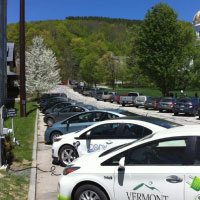
Evaluating cost-effectiveness of municipal fleet electrification utilizing municipal leasing programs
- EVs represent an opportunity for municipalities to advance energy and climate goals
- EVs improve the quality of life for residents due to reduced noise and no tailpipe emissions
- The business case for electrification benefits from higher mileage and vehicle utilization
- EV applications need to be tailored to vehicle model and range for optimal utilization
- EVs are less expensive than internal combustion engine vehicles
- Fleets will benefit from expanded models of EVs to right-size applications with vehicles as the market matures
- Activity conducted from October 2013 through October 2016
Case Study Information
Overview
Company: Vermont Municipal Case Studies including the municipalities of Jericho, Milton, Winooski, and the Chittenden County Regional Planning Commission Type: Municipal fleet Location: Vermont Case Study Publishing Date: June 2016 Fleet Size: N/A Program Goals: Leverage special leasing program to begin implementing EVs into municipal fleets to achieve goals established in the State of Vermont’s Comprehensive Energy Plan (CEP) Fleet Conversion Vehicles: Various diesel, gas, and personal travel / mileage reimbursement- Chittenden County Regional Planning Commission: Mileage reimbursement from personal travel
- Town of Milton: 2002 Chevrolet Malibu
- City of Winooski: The city removed five older vehicles from their fleet including an unmarked police car, a diesel truck, a sedan and two pick-up trucks
Case Study
Objective: In 2013, Vermont municipalities were presented with an opportunity to lease Mitsubishi i-MiEVs through a special leasing program offering the vehicles at $110 a month for three years with no down payment. VEHICLE OVERVIEW Number of Vehicles: 7 total- Chittenden County Regional Planning Commission: 2
- Town of Milton: 1
- City of Winooski: 4
- Chittenden County Regional Planning Commission: 7,000 miles/year
- Town of Milton: ~5,000 miles/year
- City of Winooski: ~1,200 miles/year
- City of Winooski: $1,600 for the unit and installation
Summary
Program Results: Chittenden County Regional Planning Commission:- Employee reimbursement has proved more cost-effective than operating an electric vehicle; it costs CCRPC approximately $10,000 more a year to operate EVs due to fixed costs, variable usage, and non-optimized utilization
- The town saved approximately $1,500 in fuel costs
- The city saved 38% on equivalent fuel costs
- The Planning Commission had both positive and negative experiences with EVs
- EVs were successfully transitioned into fleets with no employee complains regarding vehicle performance
- The city had both positive and negative experiences with EVs
- The city realized economic savings but struggled to find practical applications the EVs in cold weather months
- EVs were successfully transitioned into fleets with no employee complains regarding vehicle performance
- The city has had a positive experience with EV, realizing cost savings and reducing noise pollution improving quality of life
- EVs were successfully transitioned into fleets with no employee complains regarding vehicle performance
- CCRPC continues to provide vehicles for employee use to work toward achieving state climate and energy goals
- The town continues to operate EVs
- The city continues to operate EVs
References
Case Study Source Vermont Energy Investment Corporation. Electric Vehicle Fleet Case Studies 2016. https://www.ccrpcvt.org/wp-content/uploads/2018/12/V2-FINAL-CCRPC_EV_Fleet_CaseStudies_CCRPC.pdf Image source: Photo credit: Gina Campoli. https://accd.vermont.gov/sites/accdnew/files/documents/CD/CPR/2019_EVSE_Program_Description_and_Application_Round_2_FINAL_190320.pdfDes Moines, Iowa Municipal Fleet Leasing

The City of Des Moines, Iowa discovers cost-effective procurement strategy to begin transitioning EVs into their municipal fleet
- The City of Des Moines was able to procure 4 Nissan Leaf EVs using a municipal lease program
- By evolving procurement to include municipal leasing options, EV business cases can become more cost justified, reducing initial upfront capital costs and realizing operational savings immediately
- Activity conducted since 2019
Case Study Information
Overview
Company: The City of Des Moines, Iowa Type: Municipal fleet Location: Des Moines, Iowa Case Study Publishing Date: November 2020 Program Goals: Explore fleet leasing as a viable alternative to vehicle purchasing Replacement Vehicle Class: Class 1 passenger vehicle Vehicle Use Case: Short-distance travel by city employees in the Community Development Department Replacement Vehicle Fuel Consumption: N/ACase Study
Objective:The City of Des Moines, Iowa engaged with the The Climate Mayors Electric Vehicle Purchasing Collaborative to identify suitable vehicles for EV replacement and explore cost-effective procurement strategies via a municipal leasing program VEHICLE OVERVIEW Number of Vehicles: 4 Types of EVs: Nissan Leaf EV Deployment Timeline: 2020 CHARGING OVERVIEW Charging Infrastructure: N/A Charging Infrastructure Costs: N/A OPERATIONS & MAINTENANCE Capital Costs: $23,899 per vehicle, less federal incentives and credits- Vehicles were purchased through the Climate Mayors Electric Vehicle Purchasing Collaborative resulting in a savings of $7,700 per vehicle compared to MSRP
- The City evolved traditional procurement from a competitive bid process to a lease agreement, allowing vehicles to be paid through two annual payments and a 36 month closed-end lease term with a $5,578 residual buyout
Summary
Lessons Learned:- Structuring procurement via a municipal lease allowed the City to experience immediate cost-parity compared to light-duty municipal sedans, not including incremental savings from reduced fuel spend
- By evolving procurement to including leasing options that reduce upfront capital, EV business cases can become more cost justified by reducing initial upfront costs
- Private leasing allows the City to apply the federal electric vehicle tax credit to each vehicle
- Utilizing a closed-ended lease program allows the cCity to test the vehicles and decide wether to keep or replace with new models
- The City plans to utilize EVs as they work toward developing a comprehensive climate action plan
References
Case Study Source The Climate Mayors Electric Vehicle Purchasing Collaborative (the Collaborative). Saving Money with Electric Vehicle Leasing November 2020. https://driveevfleets.org/wp-content/uploads/2018/09/Leasing-Case-Study-Final-11.24.2020.pdf About the Climate Mayors Electric Vehicle Purchasing Collaborative The Climate Mayors Electric Vehicle Purchasing Collaborative (the Collaborative) is a joint effort by Climate Mayors, the Electrification Coalition, and Sourcewell working toward accelerating the transition of city fleets to electric vehicles (EVs). By creating a new and innovative cooperative purchasing mechanism, the Collaborative is reducing major barriers to fleet electrification for cities and other public agencies. In addition to an innovative cooperative purchasing option, the Collaborative offers a host of technical resources, analyses, and staff support, which reduces major obstacles to fleet electrification. About Climate Mayors Representing over 74 million Americans from 48 states, Climate Mayors is a diverse network of 466 U.S. city mayors who have committed to fighting climate change. Originally founded in 2014, the network’s ranks swelled to almost 400 mayors in response to the Trump administration’s withdrawal from the Paris Agreement. Climate Mayors commit to taking ambitious action to meet each of their cities’ current climate goals, while working together towards achieving our national Paris targets. Climate Mayors is founded and Chaired by Los Angeles Mayor Eric Garcetti, and Co-Chaired by Mayors Sylvester Turner (Houston) and Martin J. Walsh (Boston). About the Electrification Coalition The Electrification Coalition (EC) is a non-partisan, not-for-profit group committed to promoting policies and actions that facilitate the deployment of plug-in electric vehicles on a mass scale in order to combat the economic, public health, and national security dangers caused by America’s dependence on oil. The EC works with a variety of stakeholders that represent the entire electrified transportation value chain, positioning the organization as a dedicated rallying point for an array of electrification allies.City of Austin Municipal Fleet Electrification
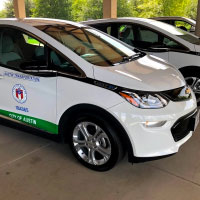
Highlighting light-duty success from an early adopter in municipal fleet electrification
- The City of Austin has been mobilizing on a carbon neutral fleet since 2007
- The City has electrified 5.36% of its fleet
- Telematics is utilized to evaluate vehicle eligibility and model cost savings
- Bulk purchasing and non-traditional procurement has been critical to success
- Model availability for EVs continues to be a barrier for fleet electrification
- Integrated mobility is a cornerstone to the City's carbon neutral strategy
- Activity as of September 2020
Case Study Information
Overview
Company: City of Austin Type: Municipal fleet Location: Austin, Texas Case Study Publishing Date: September 2020 Fleet Size: 6,000 vehicles including light-, medium-, and heavy-duty trucks, sedans, vans and equipment Program Goals: Municipal fleet electrification aligned with the City's carbon neutral fleet goals Replacement Vehicle Class: Light-duty vehicles Vehicle Use Case: Short-distance travel by city employees Replacement Vehicle Fuel Consumption: N/ACase Study
Objective:In 2007, the City of Austin established a goal to achieve a carbon neutral fleet by 2020. The City has been actively working to transition their fleet and utilizes telematics to identify eligible vehicles. Electric vehicles have been allocated across departments to help normalize EVs across the city. VEHICLE OVERVIEW Number of Vehicles: 300 Types of EVs: Kia Niro, Mitsubishi Outlander PHEV, Chevrolet Bolt, Toyota Prius PRIME, Ford Fusion Energi, Ford F-150 XL PHEV EV Deployment Timeline: Ongoing since 2007 CHARGING OVERVIEW Charging Infrastructure: Level 2 charging, public charging Charging Infrastructure Costs: N/A OPERATIONS & MAINTENANCE Capital Costs: The City has leveraged the Climate Mayors Electric Vehicle Purchasing Collaborative for bulk purchasing outside of the traditional public bid process, saving an average of $1,300 per vehicle Operations & Maintenance: N/A TRAINING & CHANGE MANAGEMENT Training: Employee trainings are held to provide practical information and Q&A Change Management: N/ASummary
Program Results:- 10% of the City's eligible vehicles have been converted to EVs; this number represents 5.36% of the City's total fleet
- Telematics data has indicated that the City could save $3.5M dollars over ten years through fleet electrification
- Model availability for EVs continues to be a barrier for fleet electrification
- Bulk purchasing through stakeholders such as the Climate Mayors Electric Vehicle Purchasing Collaborative help reduce capital costs and build market capacity by signaling market demand to manufacturers
- The City has looked holistically at EV transitions and carbon neutrality, including utilizing mass transit and other forms of mobility as alternatives vehicle replacement
- The City plans to have 330 EVs in their municipal fleet by end of 2020
- The City also plans for twelve electric transit buses by end of 2020, equivalent to reducing 600 personal vehicles
References
Case Study Source The Climate Mayors Electric Vehicle Purchasing Collaborative (the Collaborative). Municipal Fleet Electrification: A case Study of Austin, TX September 2020. https://driveevfleets.org/wp-content/uploads/2018/09/Austin-Case-Study-Final-11.13.2020.pdf About the Climate Mayors Electric Vehicle Purchasing Collaborative The Climate Mayors Electric Vehicle Purchasing Collaborative (the Collaborative) is a joint effort by Climate Mayors, the Electrification Coalition, and Sourcewell working toward accelerating the transition of city fleets to electric vehicles (EVs). By creating a new and innovative cooperative purchasing mechanism, the Collaborative is reducing major barriers to fleet electrification for cities and other public agencies. In addition to an innovative cooperative purchasing option, the Collaborative offers a host of technical resources, analyses, and staff support, which reduces major obstacles to fleet electrification. About Climate Mayors Representing over 74 million Americans from 48 states, Climate Mayors is a diverse network of 466 U.S. city mayors who have committed to fighting climate change. Originally founded in 2014, the network’s ranks swelled to almost 400 mayors in response to the Trump administration’s withdrawal from the Paris Agreement. Climate Mayors commit to taking ambitious action to meet each of their cities’ current climate goals, while working together towards achieving our national Paris targets. Climate Mayors is founded and Chaired by Los Angeles Mayor Eric Garcetti, and Co-Chaired by Mayors Sylvester Turner (Houston) and Martin J. Walsh (Boston). About the Electrification Coalition The Electrification Coalition (EC) is a non-partisan, not-for-profit group committed to promoting policies and actions that facilitate the deployment of plug-in electric vehicles on a mass scale in order to combat the economic, public health, and national security dangers caused by America’s dependence on oil. The EC works with a variety of stakeholders that represent the entire electrified transportation value chain, positioning the organization as a dedicated rallying point for an array of electrification allies. Image Source City of Austin. https://twitter.com/austintexasgov/status/1144350983591538690/photo/1City of Ann Arbor Municipal Fleet Electrification
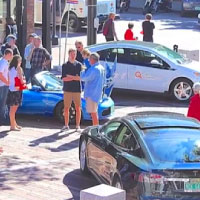
Demonstrating municipal leadership with fleet electrification following the city’s Green Fleets Policy
- The City of Ann Arbor was able to procure 3 Chevrolet Bolt EVs using a municipal lease program
- The pilot deployment was well received by City staff
- EVs are charged in visible locations to increase public awareness and adoption
- Peer-to-peer sharing and collaboration helped eliminate roadblocks
- Establishing a working partnership with The Climate Mayors Electric Vehicle Purchasing Collaborative was critical to establishing policy and finding creative financing solutions for EV fleet integration
- Activity conducted since 2019
Case Study Information
Overview
Company: The City of City of Ann Arbor Type: Municipal fleet Location: Ann Arbor, Michigan Case Study Publishing Date: June 2020 Fleet Size: 215 vehicles Program Goals: Municipal fleet EV purchase aligned with Ann Arbor's carbon neutral policy Replacement Vehicle Class: Class 1 light-duty vehicles Vehicle Use Case: Short-distance travel by city employees in the motor pool, the water treatment plan, and code enforcement divisions Replacement Vehicle Fuel Consumption: N/ACase Study
Objective:After an update to the City's Green Fleets Policy in 2018, the City of Ann Arbor's City Council directed City staff to begin incorporating EVs into their municipal fleet wherever possible. The City established a working partnership with the The Climate Mayors Electric Vehicle Purchasing Collaborative to develop strategies and policies for light-duty fleet electrification. In 2019, the City conducted a pilot to evaluate viability of EV fleet electrification. VEHICLE OVERVIEW Number of Vehicles: 3 Types of EVs: 2019 Chevrolet Bolt EV Deployment Timeline: 2019 Ann Arbor’s City Council passed their Climate Action Plan at the end of 2012 with a goal to reduce community-wide emissions by 25% by 2025 and 90% by 2050. At the time, no goals were set for city fleets. CHARGING OVERVIEW Charging Infrastructure: Level 2 charging Charging Infrastructure Costs: N/A OPERATIONS & MAINTENANCE Capital Costs: N/A Operations & Maintenance: N/A TRAINING & CHANGE MANAGEMENT Training: N/A Change Management: N/ASummary
Lessons Learned:- The pilot deployment was well received by City staff
- The City learned that aligning fleet replacements with end of life cycles allows for stronger EV business cases
- Creative procurement alternatives such as municipal leasing reduce and/or eliminate capital requirements to catalyze EV programs
- Alternative funding sources from state and federal funding programs such as the Michigan Volkswagen Settlement funding, FTA Low or No Emission Program, and various other incentives are a critical component to mobilizing on policy goals Next Steps:
- The City's Fleet Plan now reflects considerations for life cycle costs, fuel type and fuel efficiency standards
- The City has expanded their fleet electrification goals committing to a total of 20 EV and PHEVs in 2019-2020
References
Case Study Source The Climate Mayors Electric Vehicle Purchasing Collaborative (the Collaborative). Municipal Fleet Electrification: A case Study of Ann Arbor, MI June 2020. https://driveevfleets.org/wp-content/uploads/2018/09/Ann-Arbor-New-Case-Study-Final-9.10.2020.pdf About the Climate Mayors Electric Vehicle Purchasing Collaborative The Climate Mayors Electric Vehicle Purchasing Collaborative (the Collaborative) is a joint effort by Climate Mayors, the Electrification Coalition, and Sourcewell working toward accelerating the transition of city fleets to electric vehicles (EVs). By creating a new and innovative cooperative purchasing mechanism, the Collaborative is reducing major barriers to fleet electrification for cities and other public agencies. In addition to an innovative cooperative purchasing option, the Collaborative offers a host of technical resources, analyses, and staff support, which reduces major obstacles to fleet electrification. About Climate Mayors Representing over 74 million Americans from 48 states, Climate Mayors is a diverse network of 466 U.S. city mayors who have committed to fighting climate change. Originally founded in 2014, the network’s ranks swelled to almost 400 mayors in response to the Trump administration’s withdrawal from the Paris Agreement. Climate Mayors commit to taking ambitious action to meet each of their cities’ current climate goals, while working together towards achieving our national Paris targets. Climate Mayors is founded and Chaired by Los Angeles Mayor Eric Garcetti, and Co-Chaired by Mayors Sylvester Turner (Houston) and Martin J. Walsh (Boston). About the Electrification Coalition The Electrification Coalition (EC) is a non-partisan, not-for-profit group committed to promoting policies and actions that facilitate the deployment of plug-in electric vehicles on a mass scale in order to combat the economic, public health, and national security dangers caused by America’s dependence on oil. The EC works with a variety of stakeholders that represent the entire electrified transportation value chain, positioning the organization as a dedicated rallying point for an array of electrification allies. Image Source City of Ann Arbor Michigan. https://www.a2gov.org/a2energy/homeowner/pages/plug-in-electric-vehicles.aspxAmazon.com Global Test Pilot for Light-Duty Urban Logistics
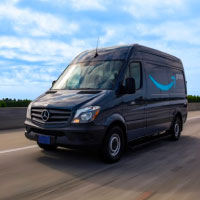
Testing cost-effectiveness of delivery fleet electrification to achieve long-term energy and sustainability goals
- 100% of all tailpipe emissions have been eliminated
- Fuel savings were more than 50% in Europe
- Real-world range was 19% lower than standardized testing
- Fuel economy ranged from 44 - 145 miles per diesel gallon equivalent (MPDGE)
- Charge management software is critical to managing demand charges
- Driver feedback has been mixed
- Global EV fleets will be critical to cost-effective operations in low emission zones
- Last miles delivery is a suitable application for fleet electrification
- Amazon.com recommends fleets pursue electrification for urban delivery trucks
- Activity conducted from June through December 2018
Case Study Information
Overview
Company: Amazon.com Type: Urban logistics / delivery trucks Location: France, Italy, and Spain Case Study Publishing Date: N/A Fleet Size: 30,000 delivery vehicles and 20,000 branded trailers Program Goals: Test operational impacts for electric delivery vans within three target markets to enable the transition of EVs and work toward achieving Amazon's long-term goal of powering its global infrastructure using 100% renewable energy Fleet Conversion Vehicles: Mixed; diesel and gas Class 1 and Class 2 urban delivery vans Replacement Vehicle Class Class 1 urban delivery vans Vehicle Use Case: Local, short-distance delivery with low speeds and high stopping frequency Replacement Vehicle Fuel Consumption: N/ACase Study
Objective: Test real-world implications of EV fleet electrification by deploying Class 1 delivery vans equipped with telematics in three target city's worldwide including Paris, Milan and Madrid representing a wide range of operating temperatures VEHICLE OVERVIEW Number of Vehicles: N/A Types of EVs: Multiple EV models were operated and monitored EV Deployment Timeline: June and December 2018 Miles Driven: >20,000 miles CHARGING OVERVIEW: Charging Infrastructure: Level 2 charging Charging Infrastructure Cost: N/A OPERATIONS & MAINTENANCE Capital Costs: EV procurement costs were 20-50% higher Operations & Maintenance Costs: Maintenance was not a primary objective of this testing and not actively tracked TRAINING & CHANGE MANAGEMENT Training: Basic training was provided, no special training requirements Change Management: Driver feedback has been mixed; concerns existed for range anxiety and performanceSummary
Program Results:- Real-world range was 19% lower than standardized test cycle results
- Fuel savings were more than 50% in Europe
- Fuel economy ranged from 44 - 145 miles per diesel gallon equivalent (MPDGE)
- Significant range loss was experienced in cold temperature
- Vehicle procurement is currently estimated at 20 to 50 percent premium
- Expanded charging infrastructure will be required for widespread fleet deployments
- No special training was required of drivers
- Global EV fleets will deliver additional cost-savings and business value combating congestion pricing and operating in low emission zones
- While it was found that no special driver training is required, there is a need to route EVs differently focused on short-haul trips to reduce range anxiety
- Charge management software and time of use programs are critical to managing demand charges
- Last miles delivery was identified as a suitable application for fleet electrification
- Amazon continues to integrate EVs into their fleet globally
References
Case Study Source Business for Social Responsibility (BSR). Amazon.com: EV Case Study. https://www.bsr.org/en/collaboration/groups/future-of-fuels/case-studies/anderson-dubose-ev-case-study Image source: Amazon.com. https://sustainability.aboutamazon.com/environment/sustainable-operations/transportationMulti-Family Condominium Charging in California
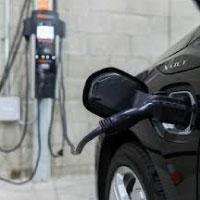
Implementing multi-family charging for an 18-unit condominium property in Rolling Hills Estates, California
- Utility Charge Ready program was critical to program success
- Resident cooperation is critical for successful on-site implementation
- Multiple-head charging allowed residents to reduce charging equipment costs
- Charging equipment installation was fast and easy with minimal disruption to residents
- On-site charging has increased the property value
- On-site charging has incentivized more residents to choose electric vehicles
- Activity conducted in 2019
Case Study Information
Overview
Company: Silver Spur Court Condos Type: Multi-family charging Location: Rolling Hills Estates, California Case Study Publishing Date: August 2019 Fleet Size: N/A Program Goals: Bring on-site charging to Silver Spur Court Fleet Conversion Vehicles: N/A Replacement Vehicle Class N/A Vehicle Use Case: N/A Replacement Vehicle Fuel Consumption: N/ACase Study
Objective: Two-phase implementation of charging infrastructure VEHICLE OVERVIEW Number of Vehicles: N/A Types of EVs: Light-duty passenger class EV Deployment Timeline: N/A Miles Driven: N/A CHARGING OVERVIEW: Charging Infrastructure: Level 2 charging; 27 charging ports deployed in two phases Charging Infrastructure Cost: The HOA utilized Southern California Edison’s Charge Ready program to help guide and administer the program. The Charge Ready program provides for the procurement and installation of make-ready EV charging infrastructure including transformers, panels and conduit. Once fully completed, owners paid a small fraction of the project cost. OPERATIONS & MAINTENANCE Capital Costs: N/A Operations & Maintenance Costs: HOA residents were able to lower their overall individual cost by strategically positioning the two-port charging stations to serve two parking spaces, cutting the number of charging stations they needed to install in half. TRAINING & CHANGE MANAGEMENT Training: Basic training was provided to residents Change Management: No special requirements were required for change managementSummary
Program Results:- Residents have been extremely happy about the project
- Cooperation amongst residents allowed for ease of implementation
- Charging equipment installation was fast and easy with minimal disruption to residents
- Without a utility-sanctioned Charge Ready program, the project would have been delayed and deemed cost-prohibitive
- Stakeholders recommend other HOAs understand residents’ needs and meet regularly during the project
- The project benefited from bringing the local utility into the process early for subject matter expertise
- With a reliable place to charge, five residents decided to go electric, and 11 of 18 total units now have electric cars
- The HOA believes the condos have increased in value by adding on-site charging for residents
References
Case Study Source Southern California Edison. Charge Ready Case Study: Silver Spur Court Condos 2019. https://www.sce.com/sites/default/files/inline-files/2019.08.26_Silver%20Spur%20Condo%20Case%20Study.pdf Image source: Southern California Edison. https://www.sce.com/sites/default/files/inline-files/2019.08.26_Silver%20Spur%20Condo%20Case%20Study.pdfCincinnati, Ohio Municipal Fleet Electrification
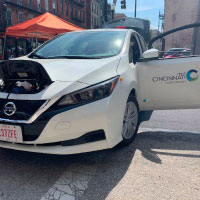
The City of Cincinnati, Ohio discovers cost-effective procurement strategy to begin transitioning EVs into their municipal fleet
- Cincinnati, Ohio was able to procure 3 EVs using a municipal lease program
- By evolving procurement to include municipal leasing options, EV business cases can become more cost justified, reducing initial upfront capital costs and realizing operational savings immediately
- EVs proved to be a cost-effective business case for light-duty vehicles
- Medium- and heavy-duty vehicles will be considered as the market matures
- The City remains focused on deploying EVs in the fleet
- Activity conducted since 2018
Case Study Information
Overview
Company: City of Cincinnati, Ohio Type: Municipal fleet Location: Cincinnati, Ohio Case Study Publishing Date: April 2020 Program Goals: Realize a city-wide goal of reducing greenhouse gas (GHG) emissions by 84% below 2006 levels by 2050, including operating 100% of the city buildings and fleet as carbon neutral by 2035 and tripling renewable energy generation for residents and businesses Replacement Vehicle Class: Class 1 passenger vehicle Vehicle Use Case: Parking enforcement vehicles Replacement Vehicle Fuel Consumption: N/ACase Study
Objective: The Cincinnati City Council voted to procure EVs as part of the Green Cincinnati Program in December of 2018; in January 2020 the City purchased 3 EVs for a real-world pilot to inform future deployments VEHICLE OVERVIEW Number of Vehicles: 3 Types of EVs: Nissan Leaf, Chevrolet Bolt EV Deployment Timeline: 2020 CHARGING OVERVIEW Charging Infrastructure: N/A Charging Infrastructure Costs: N/A OPERATIONS & MAINTENANCE Capital Costs: Vehicles were procured via a municipal lease program through the Climate Mayors Electric Vehicle Purchasing Collaborative Operations & Maintenance: Based on a sample of 11 vehicles, EVs are estimated to provide a 17% reduction in total cost of ownership TRAINING & CHANGE MANAGEMENT Training: N/A Change Management: Incorporating EVs into a fleet requires dedicated planning and infrastructure improvementSummary
Program Results:- EVs are estimated to provide 17% reduction in total cost of ownership, providing up to $150,000 in operational savings, avoiding 65,000 gallons of fuel, and reducing GHGs by 1,450,000
- Fleet telematics assessments were critical to understanding replacement vehicle candidates
- Structuring procurement via a municipal lease allowed the City to experience immediate cost-parity compared to light-duty municipal sedans, not including incremental savings from reduced fuel spend
- By evolving procurement to including leasing options that reduce upfront capital, EV business cases can become more cost justified by reducing initial upfront costs
- Private leasing allows the City to apply the federal electric vehicle tax credit to each vehicle
- Medium- and heavy-duty vehicles will be considered as the market matures
- Twenty additional EVs were planned for procurement in 2020
- The City remains focused on deploying EVs in the fleet
References
Case Study Source The Climate Mayors Electric Vehicle Purchasing Collaborative (the Collaborative). Municipal Fleet Electrification: A case Study of Cincinnati, Ohio 2020. https://driveevfleets.org/wp-content/uploads/2018/09/Cincinnati-Case-Study_April2020.pdf About the Climate Mayors Electric Vehicle Purchasing Collaborative The Climate Mayors Electric Vehicle Purchasing Collaborative (the Collaborative) is a joint effort by Climate Mayors, the Electrification Coalition, and Sourcewell working toward accelerating the transition of city fleets to electric vehicles (EVs). By creating a new and innovative cooperative purchasing mechanism, the Collaborative is reducing major barriers to fleet electrification for cities and other public agencies. In addition to an innovative cooperative purchasing option, the Collaborative offers a host of technical resources, analyses, and staff support, which reduces major obstacles to fleet electrification. About Climate Mayors Representing over 74 million Americans from 48 states, Climate Mayors is a diverse network of 466 U.S. city mayors who have committed to fighting climate change. Originally founded in 2014, the network’s ranks swelled to almost 400 mayors in response to the Trump administration’s withdrawal from the Paris Agreement. Climate Mayors commit to taking ambitious action to meet each of their cities’ current climate goals, while working together towards achieving our national Paris targets. Climate Mayors is founded and Chaired by Los Angeles Mayor Eric Garcetti, and Co-Chaired by Mayors Sylvester Turner (Houston) and Martin J. Walsh (Boston). About the Electrification Coalition The Electrification Coalition (EC) is a non-partisan, not-for-profit group committed to promoting policies and actions that facilitate the deployment of plug-in electric vehicles on a mass scale in order to combat the economic, public health, and national security dangers caused by America’s dependence on oil. The EC works with a variety of stakeholders that represent the entire electrified transportation value chain, positioning the organization as a dedicated rallying point for an array of electrification allies. Image Source City of Cincinnati. https://twitter.com/cityofcincy/status/1171097231635755009King County Metro Electric Bus Pilot
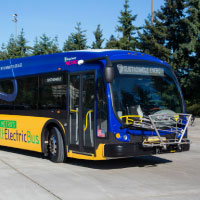
Evaluating cost effectiveness and environmental savings of fleet electrification battery electric vehicles within Seattle, Washington
- Electric buses present a viable vehicle technology for public transit operations
- Battery Electric Buses (BEBs) produce fewer greenhouse gases versus diesel buses
- BEBs maintenance costs were 44% less than that of diesel equivalent buses and 17.8% less than hybrid buses
- BEBs fuel economy was lower than diesel equivalent buses due to fuel prices and excessive energy demand charges
- BEBs fuel economy was 2.84 kWh/mile or 13.3 miles per diesel gallon equivalent
- Comparable diesel buses realized 5.1 miles per diesel gallon equivalent
- Maintenance costs were $.26 per mile total for battery electric buses with an 80.6% average availability
- Diesel equivalent buses realized $.46 per mile with an 86.4% average availability
- Hybrid equivalent buses realized $.32 per mile with a 90.5% average availability
- Charging is critical to effective operations including on-route and in-depot
- Maintenance teams experienced parts issues in effectively maintaining the BEB fleet
- Activity conducted from April 2016 - March 2017
Case Study Information
Overview
Company: King County Metro (KCM) Location: Seattle, Washington Case Study Publishing Date: February 2018 Fleet Size: 1,540 buses Program Goals: Reduce energy consumption and greenhouse gas emissions Fleet Conversion Vehicles: Diesel trolley replicas at the end of their expected service life Replacement Vehicle Class 40' public transit buses - diesel, hybrid and an electric trolley Vehicle Use Case: Public transportation on an 18.6 mile loop Replacement Vehicle Fuel Consumption: 5.3 miles per gallon for diesel, 6.3 miles per gallon equivalent for hybrid, and 14.7 miles per gallon equivalent for trolleyCase Study
Objective: In February 2016 King County Metro (KCM) began operating a fleet of four battery electric buses (BEBs) in its service area. Performance was tracked and analyzed from April 2016 through March 2017. VEHICLE OVERVIEW Number of Vehicles: 3 Types of EVs: Proterra’s 40-foot Catalyst BEB EV Deployment Timeline:- February 2016: electric bus fleet operations begins
- April 2016 - March 2017: timeframe of fleet performance and analysis Miles Driven: 83,128 as of March 2017
- Fuel economy was 2.36 kWh/mile or 15.9 miles/diesel gas equivalent (dge)
- Electric vehicle energy costs were $.57/mile over the course of the pilot
- Total operating cost per mile ($/mi) for electric buses were $.26 per mile compared to $.32/mile and $.46/mile from hybrid and diesel comparable vehicles respectively
Summary
Program Results:- The battery buses averaged between 2,309 miles per month, accumulating a total of 83,128 miles through March of 2017
- The BEBs were charged between 400-500 times per month averaging 16.3 miles per charge, consuming a total of 10,000 kWh - 19,000 kWh monthly
- KC Metro paid an average of $0.20/kWh for electricity for the battery buses and $1.60/gal for diesel fuel; the fuel economy per-mile for the hybrid fleet was $0.25/mi compared to the diesel fleet at $0.30/mi and $0.57/mi equivalent for BEB energy consumption
- KC Metro experienced demand charges that accounted for 34% - 54% of their average monthly fuel bills and resulting in lower fuel economy for the BEBs
- The battery fleet had higher per-mile fuel costs due to the large difference between diesel fuel and electricity prices
- The overall average availability for each fleet was 80.6% for BEBs, 90.5% for hybrid buses, 86.4% for diesel buses, and 84.9% for trolley buses
- The BEB fleet had the lowest maintenance costs averaging $0.26/mi in comparison to $0.32/mi and $0.46/mi respectively for hybrid and diesel buses
- Maintenance costs for the battery buses was 17.8% less than that of the hybrid buses; 44.1% less than that of the diesel buses; and 43.2% less than that of the trolley buses
- Charging is critical to effective operations including on-route and in-depot
- Change management plans are critical to cost-effective operations; ensuring proactive charging and reduced demand charges
- Maintenance teams were unable to take-on end-to-end responsibilities to fully maintain BEBs due to parts issues
- The agency worked closely with the manufacturers to address early issues with charging and bus maintenance
- KCM continues to operate the electric buses
- In 2016, KCM was awarded a grant under the second round of the FTA Low-No program to add eight more 40-foot Proterra Catalyst buses in 2017
- In 2017, the agency entered into a contract with Proterra to purchase up to 73 BEBs
- KC Metro is committed to an environmentally-friendly fleet and plans to purchase 120 BEBs by 2020.
References
Case Study Source Eudy, Leslie and Jeffers, Matthew. National Renewable Energy Laboratory. Zero-Emission Bus Evaluation Results: King County Metro Battery Electric Buses. https://www.transit.dot.gov/sites/fta.dot.gov/files/docs/research-innovation/115086/zero-emission-bus-evaluation-results-king-county-metro-battery-electric-buses-fta-report-no-0118.pdf About King County Metro (KCM) King County Metro (KCM) provides public transit service to King County, Washington. Its service area covers more than 2,000 square miles, including the Seattle metro area, and contains more than 2 million residents. KCM’s bus fleet operates on 215 routes and serves approximately 395,000 passengers each weekday, on average. This fleet of 1500+ vehicles contains buses of several different propulsion types, including standard and hybrid diesel buses, battery electric buses, and electric trolley buses. Project Stakeholders: U.S. Federal Transit Administration (FTA), National Renewable Energy Laboratory (NREL), U.S. Department of Transportation (DOT), DOT’s Research, Development, and Technology Office (OST-R) Image source: King County Metro. kingcounty.govRide-sharing Electrification Feasibility with Maven Gig
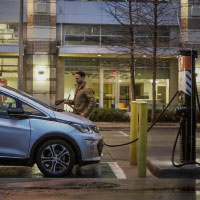
Evaluating the EV use case for ride-sharing services nationally with GM's Maven Gig
- Maven Gig deployed ~1,000 Bolt EVs on their ride-sharing platform starting in April 2017
- EVs were available for a 15% premium weekly rental rate
- EVs drove a total of 21 million electric miles averaging 125 miles per day, per car
- EVs were preferred by drivers and were one of the most popular vehicles
- 223,000 DCFC charging events were completed resulting in 6.59 Million kWh
- Drivers primarily charged Bolt EVs at public EVgo stations
- Most cities at the time did not have enough fast charging infrastructure to support rapid electrification of ride-share vehicles
- Ride-sharing provides a key channel for OEMs to advance consumer awareness and adoption
- As an early adopter in mobility services, Maven Gig planned to continue to build a sustainable business model that included EV fleets; however, as of April 2020, GM closed the ride-sharing program
- Activity conducted from April 2017 - April 2020
Case Study Information
Overview
Company: Maven Gig Type: Ride-sharing Location: London, Los Angeles, San Francisco, San Diego, Austin, Baltimore, Boston, Washington, DC Case Study Publishing Date: September 2018 Fleet Size: 190,000 members Program Goals: Evaluate EV use case for ride-sharing services. Demonstrate a consistent demand for public charging to encourage more infrastructure deployments from charging service providers. Replacement Vehicle Class: Passenger vehicles Vehicle Use Case: Ride-sharing Replacement Vehicle Fuel Consumption: N/ACase Study
Objective: Evaluate fleet electrification possibilities for Maven gig's ride-sharing use case starting with a pilot in three target markets of Los Angeles, San Diego and San Francisco. VEHICLE OVERVIEW Number of Vehicles: 190 EVs druing initial launch, including ~50 in Los Angeles, ~40 in San Diego, and ~100 in San Francisco Types of EVs: Chevrolet Bolt EV Deployment Timeline:- April 2017: test fleets begin operations in Los Angeles, San Diego and San Francisco
- August 2018: EV fleet expands to four new markets: Austin, Baltimore, Boston, and Washington, DC
Summary
Program Results:- The pilot consisted of ~1,000 Bolt EVs that drove a total of 21 million electric miles averaging 125 miler per day, per car
- EVs on the Maven Gig platform were in high demand; Bolt EVs represented one of the platform’s most popular vehicles
- 223,000 DCFC charging events were completed resulting in 6.59 Million kWh energy consumption
- Drivers primarily charged Bolt EVs at public EVgo stations, though a small percentage charged at home and smaller percentage charged at non-EVgo charging stations
- The Bolt EVs were rented for longer periods of time than gas powered alternatives, supporting the company’s business case for EV fleets
- One DC fast charging station is likely to support 10-12 vehicles per day in high-mileage, shared-use deployments
- Most cities at the time did not have enough fast charging to support rapid electrification of ride-share vehicles
- Ride-sharing EV use cases will depend fast charging infrastructure
- Partnerships with private companies, cities, and electric utilities to advance public charging is critically important to making the business case for electrified shared mobility
- The Austin market was an all-electric fleet; Maven formed partnerships with both Austin Energy and the City of Austin to leverage learnings and existing charging networks
- Ride-sharing provides a key channel for OEMs to advance consumer awareness and adoption
- Maven Gig drivers were advocates for the Bolt EVs making it one of the most popular vehicles on the platform
- EV deployments within shared mobility expand transportation electrification to a broader cross-section of society
- Maven planned to continue to invest in the electrification of its Maven Gig program
- In April 2018, Maven and EVgo expanded their partnership with EVgo’s announcement of a plan to build a network of dedicated DC fast charging stations for Maven Gig EV drivers
- As an early adopter in mobility services, Maven Gig planned to continue to build a sustainable business model that included EV fleets; however, as of April 2020, GM closed the ride-sharing program
References
Case Study Source Electrification Coalition. EV Case Study: The Electric Bellwether? 2012. https://www.electrificationcoalition.org/wp-content/uploads/2018/07/FedEx_case_study.pdf About FedEx Express FedEx Express is the world’s largest express transportation company, serving customers in more than 220 countries and territories. FedEx Express has been a first-mover on hybrids and plug-in electric vehicles (PEVs), deploying its first hybrids in 2005. Image source: FedEx. https://newsroom.fedex.com/newsroom/fedex-closes-in-on-vehicle-fleet-fuel-efficiency-goal-years-ahead-of-schedule/Frito-Lay Charging Infrastructure Pilot
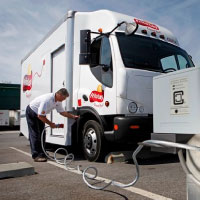
Frito-Lay pilots EVSE installation in its distribution center in Fort Worth, Texas
- Level 2 charging is sufficient for short-haul delivery and distribution
- Charge management software is critical for larger fleet electrification
- Activity conducted from April 2010
Case Study Information
Overview
Company: Frito-Lay Type: Charging infrastructure Location: Bakersfield, CA Case Study Publishing Date: N/A Fleet Size: The world’s seventh-largest privately-owned fleet; EVs represented 330 trucks as of case study Program Goals: Test infrastructure requirements to further EV goals Fleet Conversion Vehicles: N/A Replacement Vehicle Class: N/A Vehicle Use Case: N/A Replacement Vehicle Fuel Consumption: N/ACase Study
Objective: Install ten (10) EV charging stations including load-monitoring equipment and charging monitoring software at Frito-Lay's distribution center in Forth Worth, Texas VEHICLE OVERVIEW Number of Vehicles: 330 EVs Types of EVs: Smith Newton battery-electric distribution trucks with 100 mile range EV Deployment Timeline: 2010 Miles Driven: N/A CHARGING OVERVIEW Charging Infrastructure: Level 2 chargers Charging Infrastructure Cost: Frito-Lay contracted Chateau Energy Solutions for a turn-key design and installation program including charge management software OPERATIONS & MAINTENANCE Capital Costs: N/A Operations & Maintenance Costs:N/A TRAINING & CHANGE MANAGEMENT Training: Training was conducted for site personnel Change Management: N/ASummary
Program Results:- The installation took approximately six weeks and the results were well received
- Charge management software is critical to complex installations for fleet electrification
- Charge management software allows for remote access control and provides valuable information such as charge supply voltage, power usage, charger schedules, alarms, detailed trends and records of charger performance, utility costs, and equipment runtime in real-time
- Frito-Lay has installed $6 million in EV infrastructure in more than 25 locations with additional target facilities nationwide
References
Case Study Source Chateau Energy Solutions. Frito-Lay Plugs in to the Demand for Electric Vehicle Fleet Trucks https://chateaues.com/insights/case-studies/frito-lay-plugs-in-to-the-demand-for-electric-vehicle-fleet-trucks/ Image source: Chateau Energy Solutions. https://chateaues.com/insights/case-studies/frito-lay-plugs-in-to-the-demand-for-electric-vehicle-fleet-trucks/Charlotte, North Carolina Municipal Fleet Electrification
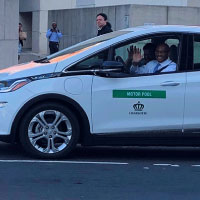
Mobilizing plans for all City fleet and facilities to be fueled by 100% zero-carbon sources by 2030 in Charlotte, North Carolina
- The City's Sustainable and Resilient Fleet Policy was critical to guide electrification plans
- The policy requires EV prioritization in fleet replacements wherever practical
- The policy also includes fleet right-sizing and route optimization
- EV business cases require a total cost of ownership evaluation
- Heavy-duty EV applications remain limited due to lack of supply
- A policy-first approach to EV electrification allows for large-scale transitions
- Telematics data has been critical to modeling business cases and identifying candidate vehicles
- Activity conducted since 2012
Case Study Information
Overview
Company: City of Charlotte Type: Municipal fleet, charging infrastructure Location: Charlotte, North Carolina Case Study Publishing Date: October 2020 Fleet Size: 5,500 vehicles including 2,700 light-duty vehicles and 700 heavy-duty vehicles Program Goals: Municipal fleet electrification aligned with the City's sustainability goals Replacement Vehicle Class: Light-duty vehicles Vehicle Use Case: Short-distance travel by the City employees Replacement Vehicle Fuel Consumption: N/ACase Study
Objective: Test and evaluate the real-world driving conditions and total cost of ownership for fleet electrification. In partnership with the Climate Mayors Electric Vehicle Purchasing Collaborative and telematics company, Sawatch, the City deployed telematics on ten potential EV candidate vehicles during 2019. VEHICLE OVERVIEW Number of Vehicles: 42 Types of EVs: Various; procurement via the Climate Mayors Electric Vehicle Purchasing Collaborative EV Deployment Timeline: Beginning in 2019; test pilot was completed for 90 days CHARGING OVERVIEW Charging Infrastructure: Public charging installation began in 2012; networked EVSE was installed in 10 target locations Charging Infrastructure Costs: N/A OPERATIONS & MAINTENANCE The following data was captured and modeled from ten real-world ICE vehicles using telematics data to inform projected savings by replacing the top five candidate vehicles Capital Costs: N/A Operations & Maintenance:- 2,870 gallons in fuel savings
- $11,400 total operational savings
Summary
Program Results:- Using telemematics data for a 90 day test, the City discovered that by replacing the top five vehicles in a cohort of ten would result in a 31% decrease in fleet GHG emissions, saving 2,870 gallons of fuel per year, reducing Cost Per Mile (CPM) by 67%, and achieving operational savings of $11,400 per year
- The City was able to begin effectively transitioning its fleet at a larger scale due to its policy-first approach
- The City's Sustainable and Resilient Fleet Policy has been regarded as a
gold standard
for fleet electrification - Utilizing direct procurement from the Climate Mayors Electric Vehicle Purchasing Collaborative is critical for implementation agility
- The City's public charging infrastructure was critical to operationalizing their own fleet
- The City's fleet team, environmental services, and building department developed a strategy to identify and maintain owned charging networks
- The City has installed telematics data to inform future purchasing decisions using real-world vehicle data to support and inform business cases that model true total cost of ownership
- The City has evolved procurement policies for medium- and heavy-duty vehicles
- The City has established an EV-first policy for all eligible vehicle replacements
- The City plans to purchase an additional 27 EVs in FY2021, bringing the City’s total EVs to 42
- The City also plans for five electric transit buses by end of 2020
References
Case Study Source The Climate Mayors Electric Vehicle Purchasing Collaborative (the Collaborative). Municipal Fleet Electrification: A case Study of Charlotte, NC October 2020. https://driveevfleets.org/wp-content/uploads/2018/09/Charlotte-Case-Study-Final-11.9.2020.pdf About the Climate Mayors Electric Vehicle Purchasing Collaborative The Climate Mayors Electric Vehicle Purchasing Collaborative (the Collaborative) is a joint effort by Climate Mayors, the Electrification Coalition, and Sourcewell working toward accelerating the transition of city fleets to electric vehicles (EVs). By creating a new and innovative cooperative purchasing mechanism, the Collaborative is reducing major barriers to fleet electrification for cities and other public agencies. In addition to an innovative cooperative purchasing option, the Collaborative offers a host of technical resources, analyses, and staff support, which reduces major obstacles to fleet electrification. About Climate Mayors Representing over 74 million Americans from 48 states, Climate Mayors is a diverse network of 466 U.S. city mayors who have committed to fighting climate change. Originally founded in 2014, the network’s ranks swelled to almost 400 mayors in response to the Trump administration’s withdrawal from the Paris Agreement. Climate Mayors commit to taking ambitious action to meet each of their cities’ current climate goals, while working together towards achieving our national Paris targets. Climate Mayors is founded and Chaired by Los Angeles Mayor Eric Garcetti, and Co-Chaired by Mayors Sylvester Turner (Houston) and Martin J. Walsh (Boston). About the Electrification Coalition The Electrification Coalition (EC) is a non-partisan, not-for-profit group committed to promoting policies and actions that facilitate the deployment of plug-in electric vehicles on a mass scale in order to combat the economic, public health, and national security dangers caused by America’s dependence on oil. The EC works with a variety of stakeholders that represent the entire electrified transportation value chain, positioning the organization as a dedicated rallying point for an array of electrification allies. Image Source City of Charlotte. https://charlottenc.gov/Pages/CitySpotlight/Drive_electric.aspxBolthouse Farms Orange EV Terminal Truck Deployment
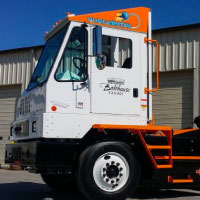
Bolthouse Farms realizes environmental impact, cost savings, and performance gains from terminal truck electrification
- EV terminal trucks had 75% less download and cost 80% less in repairs and maintenance
- Fuel saving were 90% less comparing $15,750 in diesel fuel costs annually versus $1,575 annually for EVs
- State incentives were critical to developing a cost-effective business case for EVs
- Driver and management satisfaction has been high
- Initial skepticism for vehicle performance was overcome by actual results
- OEM collaboration was critical to seamlessly overcoming operational issues
- EVs have helped enhance the brand image of Bolthouse Farms
- Activity conducted from April 2018
Case Study Information
Overview
Company: Bolthouse Farms Type: Terminal Truck Electrification Location: Bakersfield, CA Case Study Publishing Date: June 2020 Fleet Size: 1 terminal truck operating in two shifts Program Goals: Emissions reduction (elimination), cost savings, and operational performance in support of corporate sustainability objectives Fleet Conversion Vehicles: Diesel terminal truck / yard tractor Replacement Vehicle Class: Class 8 Heavy-duty truck Vehicle Use Case: N/A Replacement Vehicle Fuel Consumption: N/ACase Study
Objective: Bolthouse Farms added three electric yard trucks and diesel equivalent vehicles to its aging fleet to determine cost-effectiveness and vehicle parity with comparative diesel models VEHICLE OVERVIEW Number of Vehicles: 3 Types of EVs: Orange EV Terminal Truck EV Deployment Timeline: April 2018 Miles Driven: N/A CHARGING OVERVIEW Charging Infrastructure: Level 2 chargers Charging Infrastructure Cost: Bolthouse Farms is currently working with PG&E's EV Fleet program to help identify additional capacity needs OPERATIONS & MAINTENANCE Capital Costs: California HVPI and CORE state purchase incentives reduced the purchase price significantly Operations & Maintenance Costs:- The net fuel savings were 90% of what was previously spent on diesel fuel.
- EVs outperformed their diesel counterparts in terms of downtime, resulting in 67 hrs/year for EVs vs 261 hrs/year for diesel
- Maintenance savings were 80% in comparison to diesel vehicles, resulting in $.78/hr for EVs vs $3.93/hr for diesel
Summary
Program Results:- The EV terminal truck had 75% less download and cost 80% less in repairs and maintenance compared to diesel equivalent
- The EV terminal truck met performance objectives with only one primary operational incident that was quickly resolved
- Deployment and training were relatively simple and without challenges
- Fuel savings were 90% cheaper comparing diesel fuel costs of $15,750 annually versus $1,575 annually for EVs Lessons Learned:
- OEM collaboration can help overcome operational challenges for specific use cases and applications; in the case of Bolthouse Farms, EVs has to be retrofitted to push air out versus pull air in to avoid water intrusion
- State incentives were critical to developing a cost-effective business case for EVs
- By leveraging state incentives, vehicle costs were only slightly higher for EVs versus diesel
- Driver and management satisfaction has been high
- Stakeholder engagement is critical to operational success
- Initial skepticism for vehicle performance was overcome by actual results
- Bolthouse Farms has continued to use the EV terminal truck in daily operations
- EV terminal trucks have demonstrated proven technology and vehicle parity
- Bolthouse Farms currently has five electric terminal tractors deployed with three more in budget 2021
- Over a ten year period, Bolthouse Farms expects EVs in their fleet to remove 30 tons of NOx, 2.5 tons of HCs, 2 tons of Particulate Matter, and 45 tons of CO.
References
Case Study Source Orange EV. Bolthouse Farms Presents Case Study of Orange EV Deployments https://orangeev.com/bolthouse-farms-presents-case-study-of-orange-ev-deployments/ ACT News. EXECUTIVE INTERVIEW: Bolthouse Farms Is Achieving Significant Emissions Reductions with Electric Terminal Tractors June 25, 2020. https://www.act-news.com/news/executive-interview-bolthouse-farms-is-adding-electric-terminal-tractor-technology/ Image source: Orange EV. https://orangeev.com/bolthouse-farms-presents-case-study-of-orange-ev-deployments/Binghamton, New York Municipal Fleet Electrification
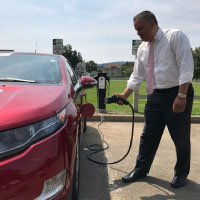
The first municipal fleet procurement with the Climate Mayors Electric Vehicle Purchasing Collaborative in the City of Binghamton, New York
- The City of Binghamton successfully integrated two EVs into their fleet
- The City was able to bypass traditional public bid to procure EVs
- Municipal fleet use helps drive adoption through endorsement and credibility
- Binghamton was the first city to leverage The Climate Mayors Electric Vehicle Purchasing Collaborative
- Activity conducted in April 2019
Case Study Information
Overview
Company: City of Binghamton Type: Municipal fleet, charging infrastructure Location: Binghamton, New York Case Study Publishing Date: March 2020 Fleet Size: 300 vehicles Program Goals: Municipal fleet electrification aligned with the City's sustainability goals Replacement Vehicle Class: Light-duty vehicles Vehicle Use Case: Short-distance travel by the City's planning department Replacement Vehicle Fuel Consumption: N/ACase Study
Objective:In 2017 the City became the first southern tier New York city to earn the New York State Energy Research and Development Authority's Clean Energy Community designation, which included a $250,000 grant for sustainability investments. Grant funds were used in support of the City's sustainability goals, including funding allocation for two zero-emission vehicles. VEHICLE OVERVIEW Number of Vehicles: 2 Types of EVs: Nissan Leaf EV Deployment Timeline: April 2019 CHARGING OVERVIEW Charging Infrastructure: Level 2 charging Charging Infrastructure Costs: $4,385 Charging equipment and installation was paid through a $2,500 New York State Energy Research and Development Authority (NYSERDA) grant and $1,895 from the City's general fund OPERATIONS & MAINTENANCE Capital Costs: $50,000 The City leveraged the Climate Mayors Electric Vehicle Purchasing Collaborative for direct municipal purchasing outside of the traditional public bid process Operations & Maintenance: N/A TRAINING & CHANGE MANAGEMENT Training: N/A Change Management: N/ASummary
Lessons Learned:- The City was able to purchase its first EVs aligned with its public charging infrastructure
- The EVs are displayed prominently and serve as a public awareness tool to drive market adoption
- The City has established an EV-first policy for all eligible vehicle replacements
- The City also plans for twelve electric transit buses by end of 2020, equivalent to reducing 600 personal vehicles
References
Case Study Source The Climate Mayors Electric Vehicle Purchasing Collaborative (the Collaborative). Municipal Fleet Electrification: A case Study of Binghampton, NY September 2020. https://driveevfleets.org/wp-content/uploads/2018/09/Binghamton-New-Case-Study-Final-8.31.2020.pdf The City of Binghampton. Blog post. City Installs Electric Charging Stations Recreation Park http://www.binghamton-ny.gov/city-installs-electric-vehicle-charging-stations-recreation-park About the Climate Mayors Electric Vehicle Purchasing Collaborative The Climate Mayors Electric Vehicle Purchasing Collaborative (the Collaborative) is a joint effort by Climate Mayors, the Electrification Coalition, and Sourcewell working toward accelerating the transition of city fleets to electric vehicles (EVs). By creating a new and innovative cooperative purchasing mechanism, the Collaborative is reducing major barriers to fleet electrification for cities and other public agencies. In addition to an innovative cooperative purchasing option, the Collaborative offers a host of technical resources, analyses, and staff support, which reduces major obstacles to fleet electrification. About Climate Mayors Representing over 74 million Americans from 48 states, Climate Mayors is a diverse network of 466 U.S. city mayors who have committed to fighting climate change. Originally founded in 2014, the network’s ranks swelled to almost 400 mayors in response to the Trump administration’s withdrawal from the Paris Agreement. Climate Mayors commit to taking ambitious action to meet each of their cities’ current climate goals, while working together towards achieving our national Paris targets. Climate Mayors is founded and Chaired by Los Angeles Mayor Eric Garcetti, and Co-Chaired by Mayors Sylvester Turner (Houston) and Martin J. Walsh (Boston). About the Electrification Coalition The Electrification Coalition (EC) is a non-partisan, not-for-profit group committed to promoting policies and actions that facilitate the deployment of plug-in electric vehicles on a mass scale in order to combat the economic, public health, and national security dangers caused by America’s dependence on oil. The EC works with a variety of stakeholders that represent the entire electrified transportation value chain, positioning the organization as a dedicated rallying point for an array of electrification allies. Image Source City of Binghampton. http://www.binghamton-ny.gov/city-installs-electric-vehicle-charging-stations-recreation-parkAnderson-DuBose Terminal Truck Deployment
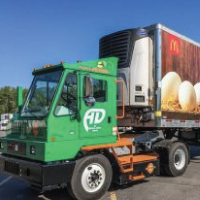
Anderson-DuBose realizes environmental impact, cost savings, and performance gains from terminal truck electrification
- 100% of all tailpipe emissions have been eliminated
- Driver satisfaction was high
- The EV terminal truck fully met performance objectives
- Net fuel savings were ~88% of what was previously spent on diesel fuel
- EV charging cost is $1.83 per day compared to ~$15.80 in diesel fuel
- Maintenance savings are ~$7.61 per day
- No special training or maintenance requirements were experienced
- Anderson-DuBose recommends fleets pursue terminal truck electrification
- Activity conducted from July 2017 through June 2018
Case Study Information
Overview
Company: Anderson-DuBose Type: Terminal Truck Electrification Location: Rochester, NY Case Study Publishing Date: January 2019 Fleet Size: 1 terminal truck operating in two shifts Program Goals: Emissions reduction (elimination), cost savings, and operational performance in support of corporate sustainability objectives Fleet Conversion Vehicles: Diesel terminal truck / yard tractor Replacement Vehicle Class: Class 8 Heavy-duty truck Vehicle Use Case: Repositioning cargo trailers in two shift operation at distribution center Replacement Vehicle Fuel Consumption: N/ACase Study
Objective: Immediate deployment of a pure electric terminal truck to replace its diesel terminal truck in daily operations. VEHICLE OVERVIEW Number of Vehicles: 1 Types of EVs: Orange EV Terminal Truck EV Deployment Timeline: July 1, 2017 to June 30, 2018 Miles Driven: 796 miles CHARGING OVERVIEW Charging Infrastructure: Level 2 in-depot chargers Charging Infrastructure Cost: N/A OPERATIONS & MAINTENANCE Capital Costs: New York state purchase incentives reduced the purchase price, resulting in a 12% higher vehicle price after incentives were applied Operations & Maintenance Costs:- The net fuel savings were ~88% of what was previously spent on diesel fuel.
- Charging the truck cost about $1.83 per day, compared to about $15.80 in diesel fuel.
- Maintenance savings is ~$7.61 per day
Summary
Lessons Learned:- Replacing a heavy-emitting diesel yard truck with an EV proved an important step in contributing to sustainability efforts of both Anderson-DuBose and its customer McDonald’s
- The EV terminal truck fully met performance objectives
- Deployment and training were relatively simple and without challenges
- The EV terminal truck provided better working conditions for Anderson-DuBose employees resulting in smoother, cooler, quieter, and cleaner operations
- Management is pleased that they can provide a safer and healthier working environment for employees while also contributing positively to neighbors and the broader community
- Anderson-DuBose has continued to use the EV terminal truck in daily operations
- EV terminal trucks have demonstrated proven technology and vehicle parity
- Based on meeting objectives in sustainability, performance, and ROI, Anderson-DuBose recommends fleets pursue electrification of terminal trucks